
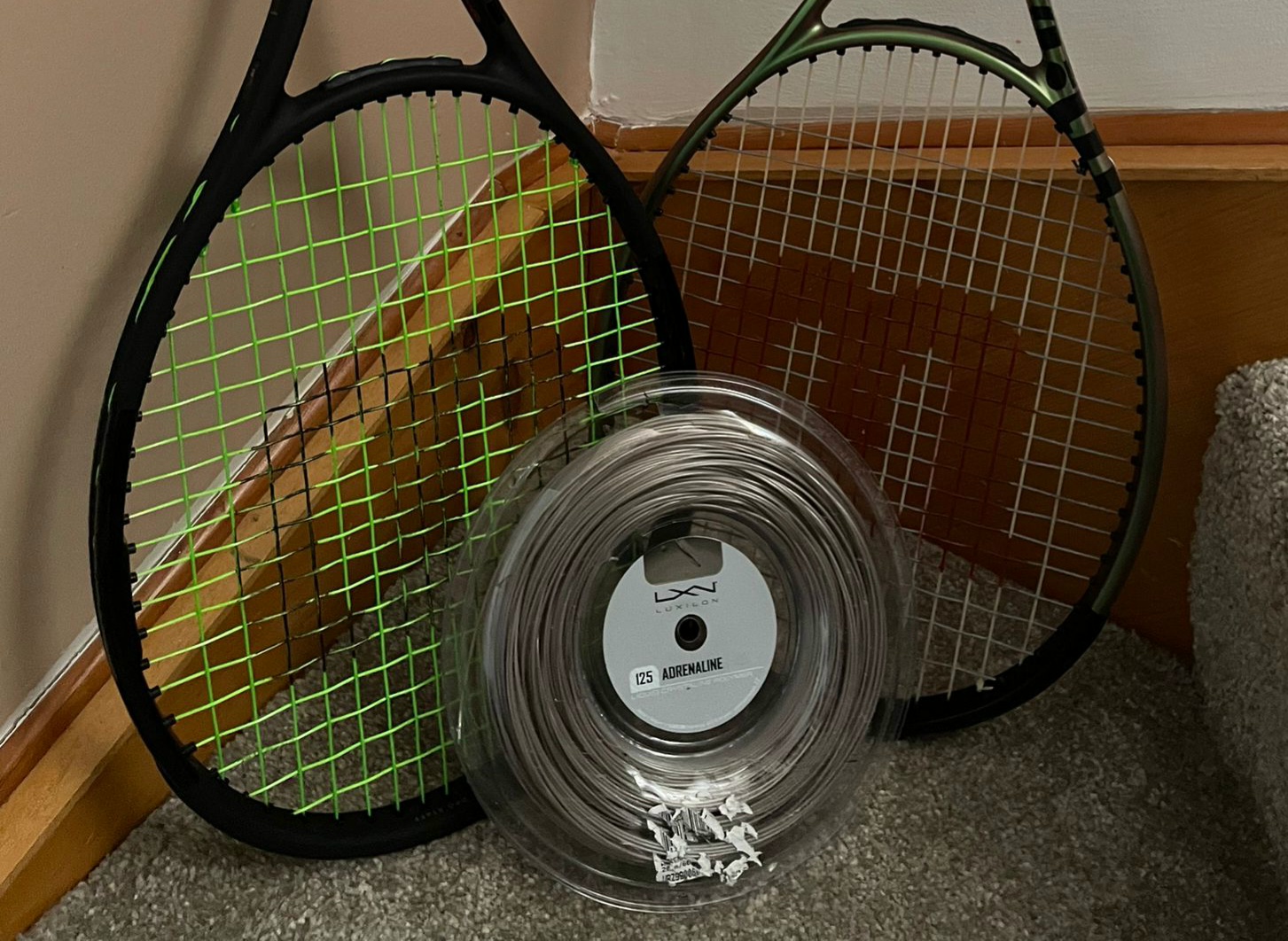
The first time a thinner string snaps during a match, gauge stops sounding like an abstract spec. The difference between 16 and 17 gauge tennis string directly impacts the lifespan of the string bed, ball connectivity, and swing confidence on critical points.
Gauge offers one of the easiest ways to tune a racquet without changing frames. While it won’t transform your strokes overnight, it provides a measurable difference in comfort, bite, and durability.
What Tennis String Gauge Actually Means
Gauge measures string thickness. Higher gauge numbers indicate thinner strings—a 17-gauge string is thinner than a 16-gauge version of the same model, and an 18-gauge is thinner still. Millimeter measurements are more reliable than gauge numbers when comparing brands because gauge labels are not fully standardized. One brand’s 17 gauge might measure 1.25 mm, while another sits at 1.20 mm.
Standard gauge measurements:
15L gauge: ~1.35 mm
16 gauge: ~1.30 mm
16L gauge: ~1.28 mm
17 gauge: ~1.25 mm
17L gauge: ~1.20 mm
18 gauge: ~1.15 mm
The “L” stands for “Light,” designating a half-size between full gauges. It provides extra feel without a dramatic loss in durability.
Feel Versus Lifespan Thicker strings last longer because they have more material to wear through, which benefits aggressive topspin hitters using polyester. If you notch main strings rapidly, moving from 17 to 16 gauge extends lifespan without altering setup characteristics significantly. If truth be told, you have to be a serious topspin hard hitter to bite into polyester and break them.
Thinner strings deliver a livelier, more responsive feel. They offer better ball pocketing, cleaner contact feedback, and freer movement across the string bed. This string movement enhances spin potential, particularly in open 16×19 string patterns. However, thin strings carry trade-offs.
An 18-gauge poly offers excellent initial feel but breaks quickly or loses tension rapidly. Conversely, a thick 15L poly maximizes durability but can feel stiff and muted in rigid frames. Perhaps a serial string breaker may chose a string like this. A thick polyester may not have thr best playability but the durability is absolutely second to none.
Potentially an arm breaker too. Power and control depend on string material, tension, head size, and pattern: Thinner multifilament: Adds depth and comfort. Thinner polyester: Increases bite and feedback, but is not inherently more powerful or arm-friendly.
Which Gauge Suits Your Game?
Choose 15L or 16 Gauge for Durability
Select 15L or 16 gauge if you break strings frequently, hit hard baselines, or use open string patterns. This range is also the safest starting point when transitioning to polyester. It suits powerful baseliners who generate high friction between main and cross strings. It is equally practical for juniors who hit with high speed but need to avoid constant restringing costs (assuming age-appropriate tension and material).
Choose 16L or 17 Gauge for the All-Round Sweet Spot 16L and 17 gauge represent the ideal balance for most recreational players. They preserve sufficient durability while improving responsiveness over thicker options.
17-gauge multifilament: Enhances touch and liveliness in muted frames. 17-gauge shaped poly: Increases ball bite for topspin players. If you play twice weekly with a 100-square-inch racquet and do not break strings monthly, start in this range.
Choose 18 Gauge When Feel Is the Priority
18-gauge string maximizes pocketing, touch, and feedback at the expense of lifespan. If you are a touch player and enjoy the feel of the ball on the strings, this is your go to. It performs exceptionally well in dense 18×20 frames, where tight string spacing protects the thin gauge and adds welcome liveliness. It is less suited for open-pattern racquets played with heavy topspin unless short string life is acceptable.
How Material Alters Gauge Choice
Gauge must be evaluated alongside material selection:
Polyester: Extremely durable compared to natural gut or multifilament, but loses tension fast. A 17-gauge poly will outlast a 16-gauge multifilament against heavy topspin. Poly strings are plastic and if you run your thumb over a poly knot it will scrape it.
Natural Gut: Highly elastic, comfortable, and hold tension, but susceptible to fraying. Not advisable for wet weather play as the damp will chew through the strings.
Multifilament: Offers soft, powerful response, but notches faster than poly. If you can forgot about how they look, these are a solid choice.
Synthetic Gut: An economical, balanced middle ground. Generally quite soft to touch.
Note: If you experience arm discomfort, switching to a thinner poly is rarely the answer. Prioritize softer string materials or lower tensions instead.
Hybrid String Setups
Hybrids combine two gauges and materials to optimize performance: Durability Setup: Stiff, thicker polyester in the mains with a softer multifilament or natural gut in the crosses. Because main strings break first, this setup protects the primary wear area. Feel Setup: Natural gut in the mains paired with a smooth, thin polyester in the crosses. This configuration delivers premium comfort, controlled string snapback, and touch. Roger Federer uses a setup like this. To test a hybrid setup without drastic changes, keep gauges close (e.g., 16-gauge poly mains with 17-gauge multifilament crosses).
Factoring in String Tension
Changing gauge alters effective string bed stiffness. When moving to a thinner version of the same string, keep your baseline tension for the first session, then adjust in small increments (~1 kg / 2 lbs) as needed. If switching from 16 to 17-gauge poly makes the ball fly, increase tension slightly. However, avoid over-tightening stiff polyester to regain control; technique, frame selection, and elasticity matter far more than extreme tension.
How to Decide
Breaking strings too fast? Move one gauge thicker. String bed feels dead or boardy? Move one gauge thinner. Elbow or shoulder pain? Change string material or lower tension before altering gauge. Make one controlled change at a time during restrings so you can measure the performance impact accurately.


